Two options artists often weigh are Inky and Vagaro. Both can help you run the business side of tattooing, but they're built from very different starting points - and the one that fits depends on whether you want a general-purpose booking tool or one purpose-built for a freelance tattoo artist.
Vagaro is a full salon-and-spa suite: scheduling, payments, POS, inventory, marketing, a marketplace, and class management. It's capable and depth-oriented. It's also a lot of software for one tattoo artist who just wants bookings and deposits to handle themselves.
What are the advantages of Vagaro?
- Deep feature set - if you run a full shop with retail, classes, and multiple staff, Vagaro covers it.
- A consumer marketplace for discovery, plus built-in marketing tools.
- Mature payments, POS and reporting.
How does Inky compare?
Inky is deliberately narrower and tattoo-shaped:
- Booking that captures what a tattoo actually needs - placement, size, references, deposit - without configuring a service menu.
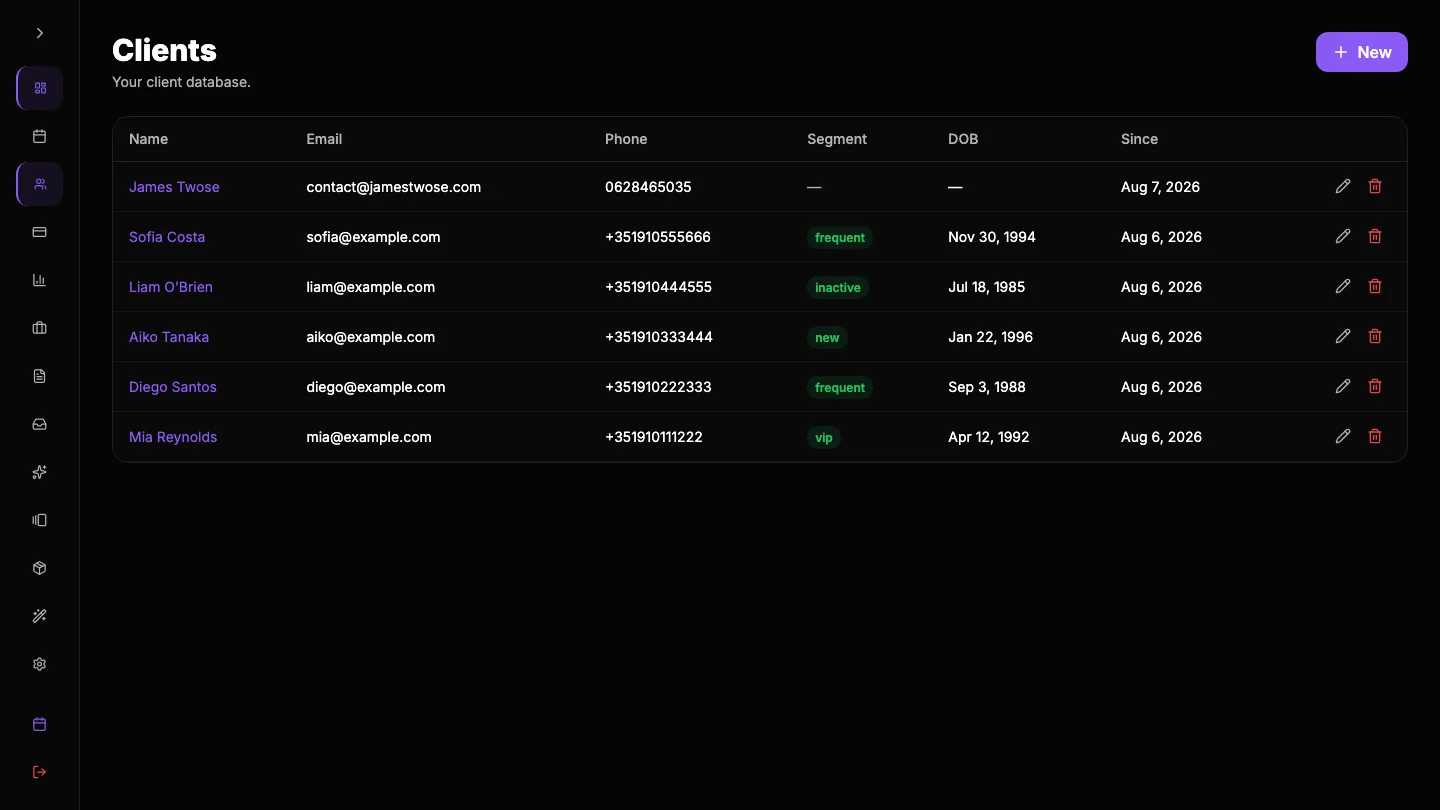
- Client records built around art: past pieces, session notes, aftercare, references.
- A portfolio that's part of the product, not a separate Instagram.
- Digital consent and intake forms, stored per client and appointment.
Where Vagaro asks you to model a salon, Inky asks you to model a working tattoo artist. That means less to set up and less to ignore.
What are the disadvantages of Vagaro for tattoo artists?
It's a big product, and most of it is irrelevant to a solo tattooer - which means more UI, more setup, and a learning curve that pays off mainly if you're running a multi-chair shop. Vagaro's base is $30/month plus $10 for each extra calendar, with common needs like digital forms ($10/mo), a website builder ($20/mo) and text marketing ($20+/mo) as paid add-ons, and higher card rates for businesses processing under $4k/month. (Its consumer marketplace is free to list on in the US.) And there's no native concept of a tattoo portfolio or consent form.
Potential downsides of Inky
Inky is newer and tattoo-first, which is also its main limitation: it does not try to be a POS, a retail inventory system, or a multi-staff salon suite. If you run a large shop with a front desk, retail stock, and a dozen chairs, a broader platform may cover more ground. Inky is built for the artist who wants the boring stuff handled so they can get back to tattooing.
Which is better for freelance tattoo artists?
There's no universal winner - it depends on what you'd rather not deal with.
Vagaro may suit artists who want:
- A full salon suite: POS, inventory, classes, multi-staff
- A consumer marketplace and built-in marketing
- Deep reporting for a real shop
Inky may suit artists who want:
- A lighter, tattoo-first setup in minutes
- Portfolio and consent forms as core features, not add-ons
- No marketplace fees on your own clients
For a freelance artist who'd rather tattoo than tend to software, Inky takes more of the business off your plate - booking, clients, deposits, portfolio and consent forms in one place, built around how tattooing actually works.